Open Hours Tues - Fri 8:30 AM to 5:00 PM
Regenerative Treatment Option

Platelet-Rich
Plasma (PRP)

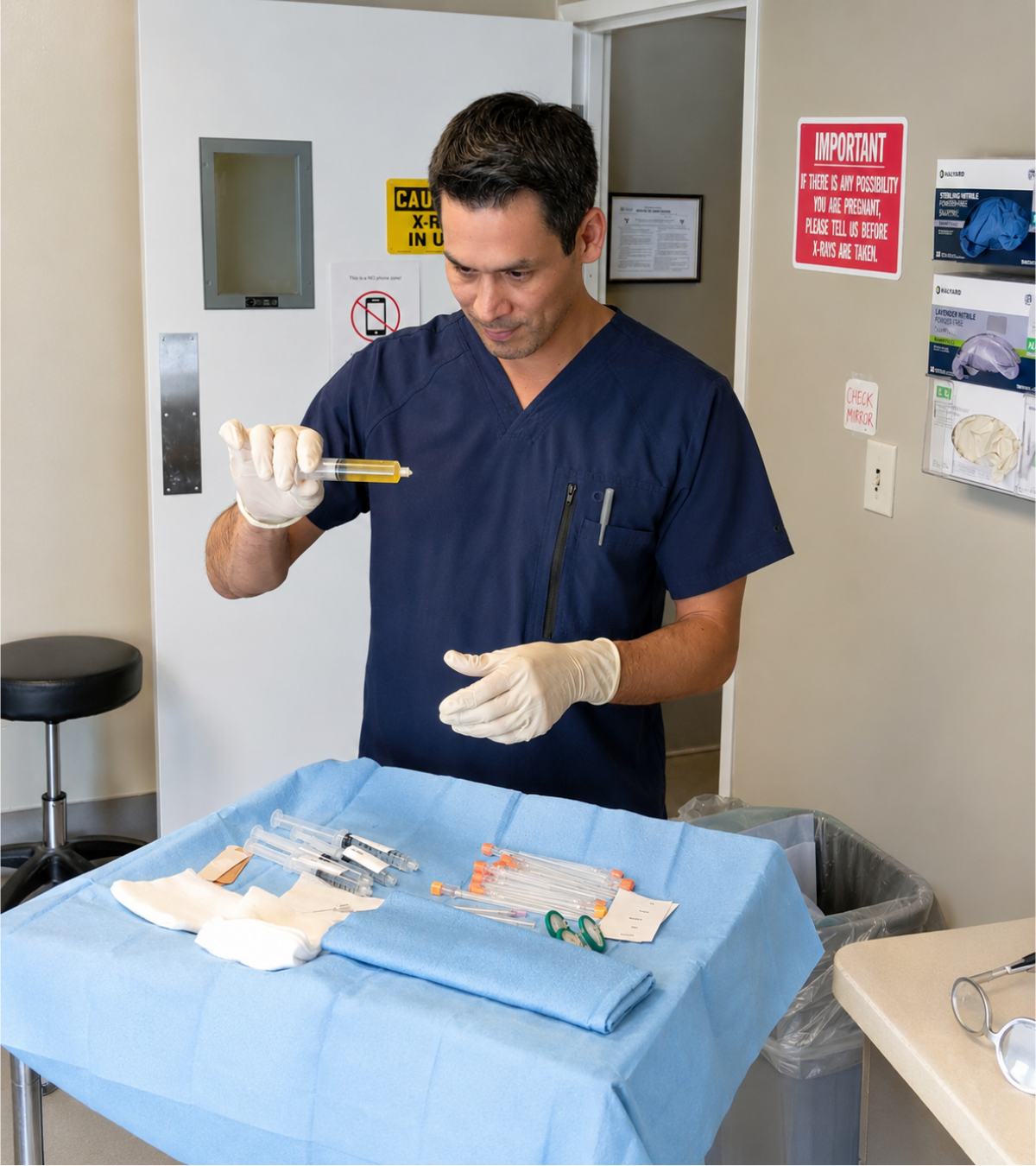
Physician performing an image-guided platelet-rich plasma injection

PRP is prepared from a small sample of your own blood, concentrating platelets and growth factors before the solution is precisely delivered to the targeted joint, tendon, ligament, or other musculoskeletal structure. At Interventional Orthopedics of Washington, each treatment plan is physician-led and personalized to your diagnosis, anatomy, and goals.

  • Prepared From Your Own Blood
  • Ultrasound or Fluoroscopy Guidance, When Appropriate
  • Physician-Led, Diagnosis-Based Planning
  • Non-Surgical, Outpatient Treatment

PRP may not be appropriate for every patient. A consultation is required to determine whether it fits your diagnosis, health history, imaging, and treatment goals. Individual responses and recovery timelines vary.

Physician performing an image-guided platelet-rich plasma injection
Treatment Overview

Platelet-Rich Plasma (PRP) therapy is a regenerative treatment that uses your body’s own growth factors to support healing in joints, tendons, and ligaments. At Interventional Orthopedics of Washington, prp injections are offered as a non-surgical option for patients seeking relief from joint pain, tendon injuries, and chronic musculoskeletal conditions.

Each prp treatment starts with precise diagnostics and is performed using image guidance to target the source of pain. Care is led by board-certified physician Dr. Otoño Silva, MD, who combines regenerative medicine expertise with a patient-first approach to deliver accurate, evidence-based prp joint treatment in Bellevue, WA.

Watch · Understanding PRP

What Is Platelet-Rich Plasma?

Learn more about platelet-rich plasma and how this regenerative treatment uses components of your own blood as part of a targeted orthopedic treatment approach.

Patient Experience

Hear From One of Our Patients

Every patient’s experience is unique. Hear directly from a patient about their treatment journey and experience with regenerative orthopedic care.

Patient Questions

Platelet-Rich Plasma (PRP) Therapy FAQs

Clear answers about PRP therapy, how it works, how it is prepared, and who may be a good candidate for treatment.

Platelet-Rich Plasma (PRP) therapy is a regenerative treatment that uses a concentrated portion of a patient’s own blood to support healing. Platelets contain growth factors that play a key role in tissue repair and inflammation control. PRP is commonly used in orthopedic medicine to treat joint pain, tendon and ligament injuries, and early osteoarthritis without surgery.

PRP has been widely studied and is used in sports medicine, orthopedic care, and rehabilitation to support recovery and restore function.

When tissue is injured, platelets naturally release growth factors that signal the body to begin healing. PRP concentrates these platelets and delivers them directly to the injured area.

By placing PRP precisely into damaged joints, tendons, ligaments, or soft tissue, the treatment helps:

  • Reduce inflammation
  • Support tissue repair
  • Improve joint stability and mobility
  • Encourage healthier tissue regeneration over time

At IOW, all PRP injections are performed using ultrasound or fluoroscopic guidance to ensure accuracy and safety.

PRP is created from a small sample of the patient’s own blood. The blood is processed in a centrifuge to separate and concentrate the platelets and growth factors. This platelet-rich solution is then injected into the targeted area using image guidance.

Because PRP is derived from the patient’s own blood, the risk of allergic reaction or rejection is extremely low.

PRP therapy is most often used for musculoskeletal conditions, including:

  • Chronic joint pain
  • Tendon and ligament injuries
  • Sprains and strains
  • Joint instability
  • Mild to moderate osteoarthritis
  • Inflammation-related pain

PRP may also be recommended when patients want to avoid steroid injections or delay surgery.

PRP is designed to support healing rather than simply masking pain. Many patients experience:

  • Reduced pain and inflammation
  • Improved joint function and mobility
  • Increased tissue strength and stability
  • Gradual, sustained improvement over time

Some patients experience temporary soreness or swelling after treatment, which is a normal part of the healing response.

PRP therapy may be appropriate for patients who:

  • Have joint, tendon, or ligament injuries
  • Are in early stages of arthritis
  • Have not improved with physical therapy or medications
  • Want a non-surgical, biologic treatment option
  • Are looking to avoid repeated steroid injections

A consultation and diagnostic evaluation are required to determine whether PRP is the right option for each individual.

Can’t find your condition on the list?

You might be a candidate. Schedule your free discovery call and let’s explore your options.

Schedule a Discovery Call

Medically reviewed by Dr. Otoño Silva, M.D.

Board Certified in Physical Medicine & Rehabilitation · Fellowship-Trained in Interventional Orthopedics, Centeno-Schultz Clinic

Last reviewed