
Open Hours
Tues - Fri 8:30 AM to 5:00 PM
Conditions We Treat
Non-Surgical Spine and Neck Care
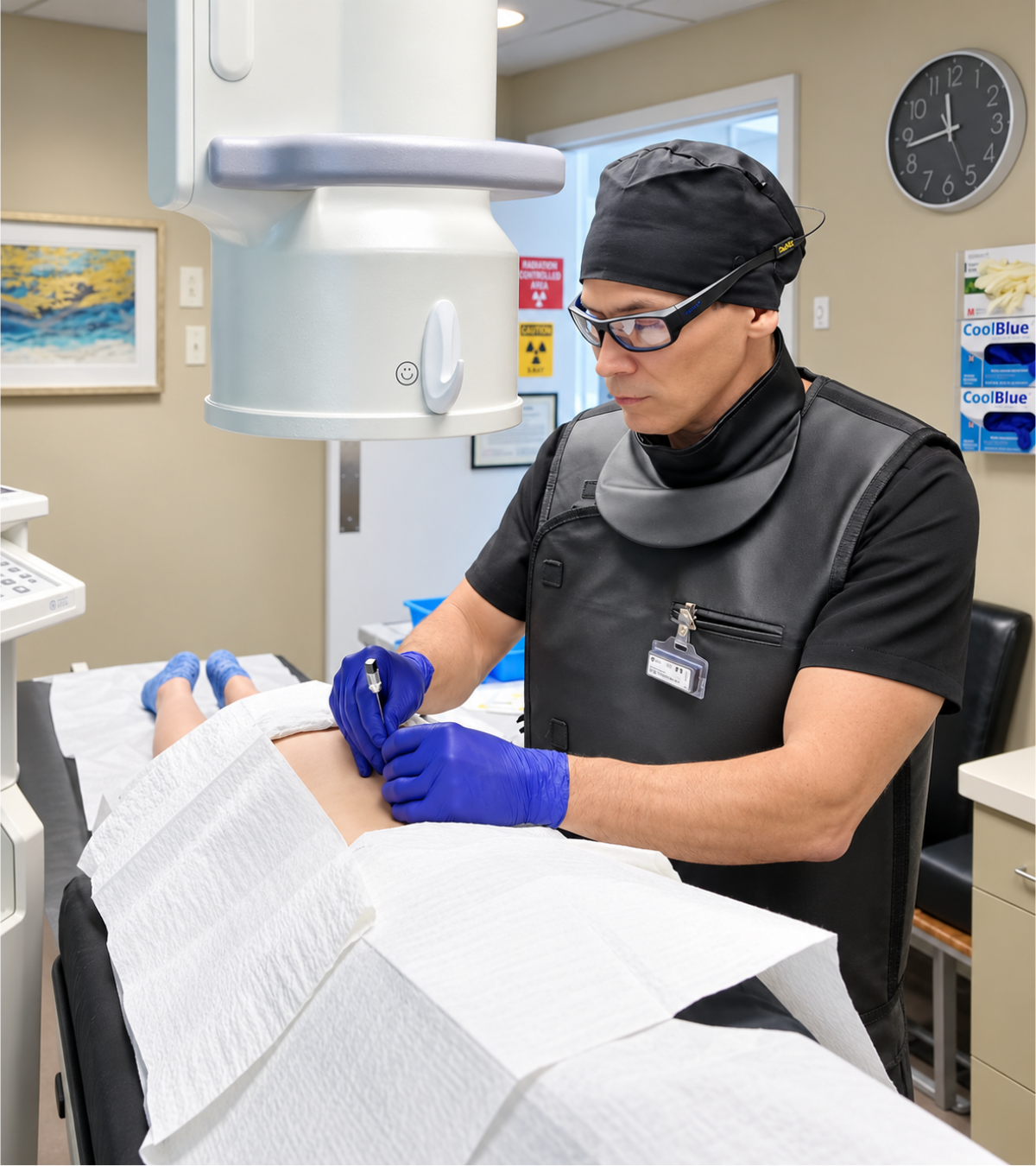
If neck or back pain is limiting your life, you may have more options than surgery, cortisone, or waiting it out. At Interventional Orthopedics of Washington in Bellevue, WA, Dr. Otoño Silva treats spine and neck problems with precise, image-guided regenerative injections that support the ligaments, tendons, joints, and nerves involved in your pain. Care is physician-led and built around your diagnosis, not a one-size-fits-all protocol.
Key Takeaways
- We focus on the root cause of neck and back pain, rather than masking symptoms.
- Treatments are non-surgical, outpatient, and guided by ultrasound or fluoroscopy for accuracy.
- Common reasons patients come to us: disc-related pain, sciatica, facet and SI joint pain, spinal stenosis symptoms, whiplash, and cervical instability.
- Dr. Silva has a particular focus on the upper cervical spine and cervical instability (CCI).
- Regenerative care may help, but it is not right for everyone. A consultation determines fit.
What We Treat in the Spine and Neck
Spine and neck pain rarely comes from one single spot. Ligaments, tendons, small joints, discs, and nerves all work together, so we look at the whole area rather than one image finding. Patients commonly see us for:
Cervical Instability and Upper-Cervical Care (Our Focus Area)
Cervical instability, sometimes called CCI, happens when the ligaments that hold the upper neck steady become loose or injured. It can cause neck pain, headaches, a heavy-head feeling, dizziness, and other symptoms that are easy to miss on a standard scan. Dr. Silva treats cervical instability with precise, image-guided injections such as PRP, prolotherapy, and hydrodissection to support the ligaments and nerves in the area. He also brings personal insight to this work, which shapes the careful, thorough way these cases are evaluated.
A Note on Hypermobility, hEDS, and Dysautonomia
Some patients with neck problems also live with joint hypermobility, hypermobile Ehlers-Danlos syndrome (hEDS), or dysautonomia and POTS. We see these as related factors that can affect healing and how the neck holds up over time, not as separate treatment services we advertise. If they apply to you, Dr. Silva will factor them into your plan. To learn more, see our education articles and videos on hypermobility and the neck.
How Our Approach Works
Precise Diagnosis First
We use a detailed exam and, where appropriate, ultrasound and imaging to find the structures driving your pain.
A Plan Built for You
Treatment is matched to your diagnosis, health history, and goals.
Image-Guided Treatment
Injections are placed using ultrasound or fluoroscopy so the right structure is treated accurately.
Whole-Body Support
We also look at factors like metabolic and hormonal health that affect how well tissue heals.
Why Patients Choose Non-Surgical Care First
Surgery and fusion can be the right answer for some people, but they are hard to undo, and cortisone can weaken tissue over time. Regenerative treatments work with your body's own healing signals instead of suppressing them. For many patients with mild to moderate problems, that makes trying a conservative, root-cause option first a sensible starting point.