Combining Hyaluronic Acid with Regenerative Therapies for Longer-Lasting Outcomes

What This Combination Involves
What Are Regenerative Therapies?
What To Expect During Treatment
Is combining PRP and hyaluronic acid better than using one alone?
Does this regenerate cartilage?
Joint pain can affect daily movement, exercise, and overall quality of life. Many patients explore non-surgical options such as hyaluronic acid injections or regenerative therapies like platelet-rich plasma (PRP).
If you're new to these approaches, it helps to understand the basics in this: Regenerative Medicine Explained
In some cases, these treatments are combined in separate injections with the goal of improving symptom relief. While this approach is used in clinical practice, it is important to understand what current evidence supports—and where limitations remain.
Quick Things To Know
Hyaluronic acid and regenerative therapies play different roles in joint care. Hyaluronic acid, a molecule that is found in the environment of joint cartilage primarily improves lubrication and joint mechanics, while PRP introduces platelet-derived growth factors that may influence inflammation and healing processes.
Most research on this combination focuses on knee osteoarthritis, and recent systematic reviews have demonstrated that the combination of the two injectates provides improved pain and function scores over 2 years compared to either alone [1,2].
What This Combination Involves
A treatment approach that uses hyaluronic acid (to support joint lubrication) alongside regenerative therapies such as PRP that are injected separately but during the same procedure.
Where It Is Most Studied
Most research on combining these treatments focuses on large joints such as the knee.
What Is Hyaluronic Acid?
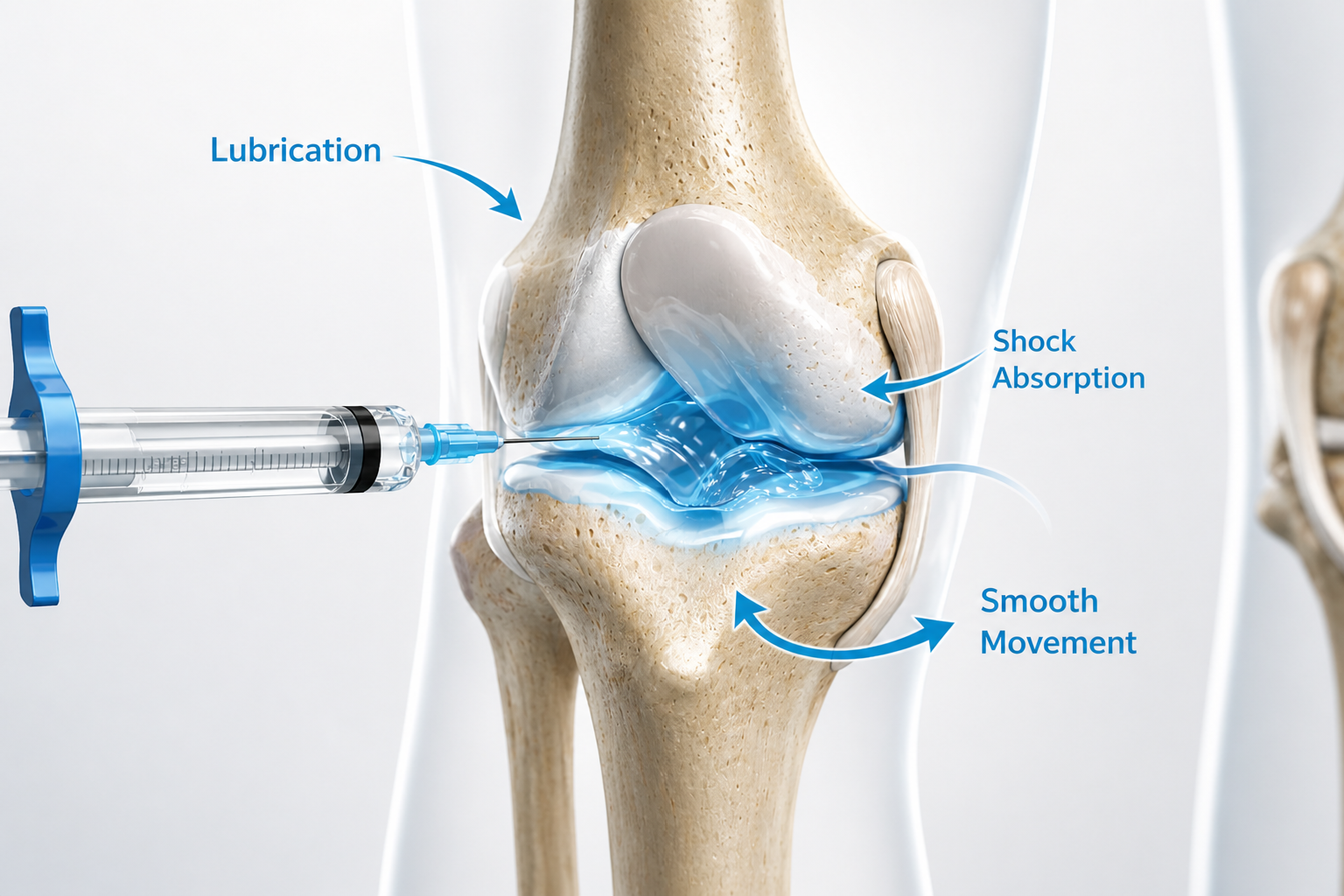
Hyaluronic acid is a naturally occurring polysaccharide found in joint fluid that contributes to:
Lubrication
Shock absorption
Smooth joint movement
In osteoarthritis, these properties may be reduced, and injections are used to help manage symptoms.
What Are Regenerative Therapies?
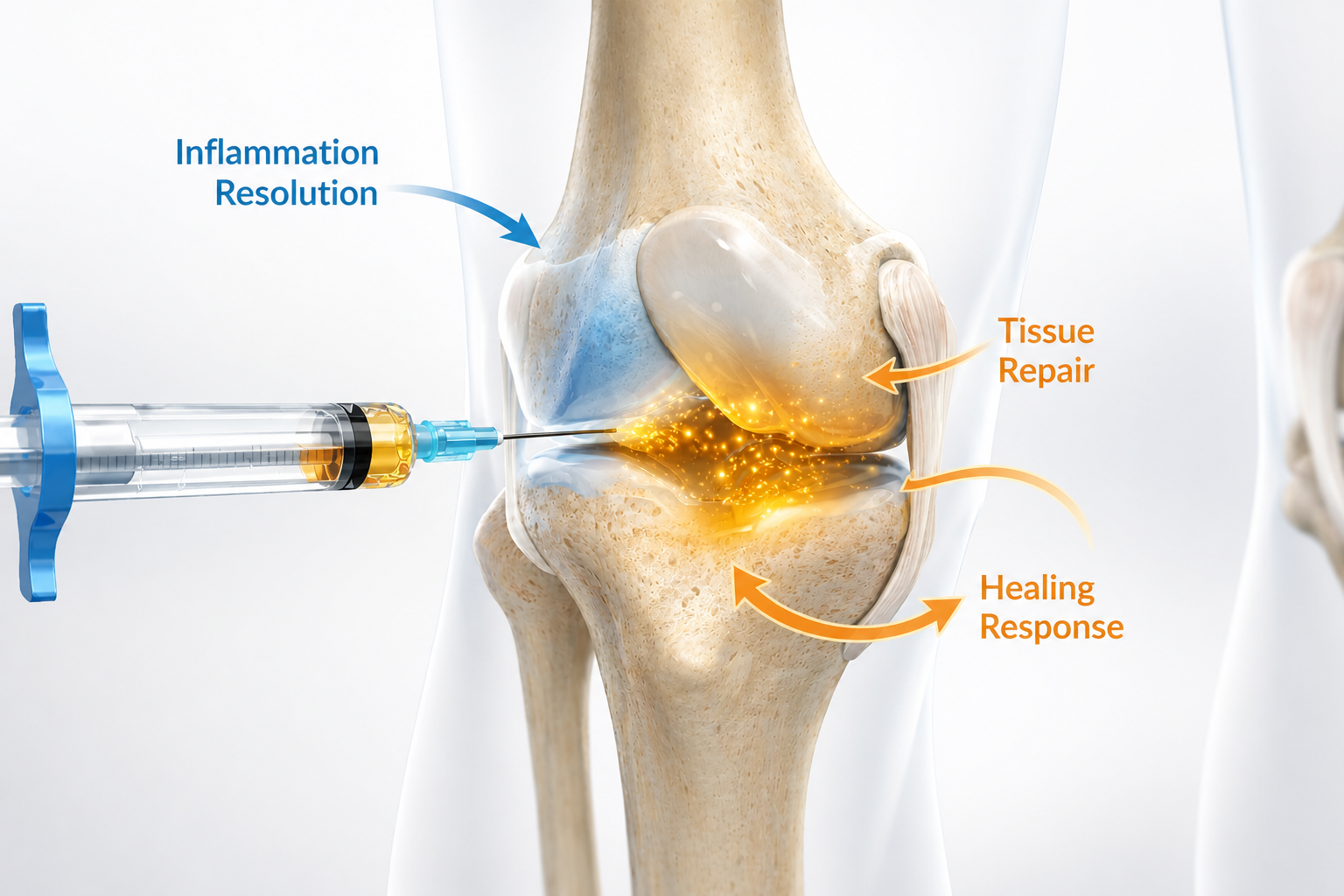
Regenerative therapies—also called orthobiologics—use biologic materials such as platelets or bone marrow to support the body’s natural healing processes.
PRP, for example, is prepared from a patient’s own blood and contains growth factors that may help regulate inflammation and support tissue repair.
For a deeper comparison of these options, you can read: Orthobiologics vs Surgery
Why Combine These Treatments?
Hyaluronic acid and regenerative therapies have different mechanisms:
Hyaluronic acid supports mechanical function and lubrication
Regenerative therapies may influence biological activity within the joint
Because of this, combining them is being explored as a way to address both aspects of joint health. Furthermore, the matrix created by the HA can improve the retention time of the biologics in the area where it is injected leading to a longer lasting effect.
What Research Suggests
Systematic reviews and clinical studies suggest that combining PRP with hyaluronic acid may:
Improve pain scores
Improve joint function
compared to hyaluronic acid alone in patients with knee osteoarthritis [1,2].
However, treatment decisions should always be individualized based on diagnosis and goals, which is discussed further in this guide on choosing the right non-surgical treatment approach.
What To Expect During Treatment
Before
Clinical evaluation
Imaging if needed
During
Blood draw (for PRP)
Preparation of platelet concentrate
Image-guided injection
After
Mild soreness may occur
Gradual return to activity
Is It Safe?
Hyaluronic acid has a well-established safety profile and is FDA approved as an injectate for joint applications such as the knee
PRP uses autologous blood, reducing risk of immune reaction
Image guidance improves accuracy
Who May Be a Candidate?
Mild to moderate osteoarthritis
Persistent symptoms despite conservative care
Patients seeking non-surgical treatment options
FAQs
Is combining PRP and hyaluronic acid better than using one alone?
Studies suggest improved outcomes compared to hyaluronic acid or PRP alone, but results vary.
Does this regenerate cartilage?
There is no strong evidence that these treatments fully restore cartilage.
How long does relief last?
Relief may last several months to years depending on the severity of the disease.
Is PRP widely used?
Yes, PRP is used in orthopedic care for conditions like early osteoarthritis and tendon injuries.
Is it safe?
Generally safe when performed properly using sterile technique.
Can it delay surgery?
Studies have suggested that regenerative medicine injections can delay damage to cartilage compared to control and lead to relief for multiple years [3].
Ready to Find the Right Approach for your Joint Pain?
If you live in Bellevue or the greater Seattle area and are exploring non-surgical options for joint pain or osteoarthritis, the team at Interventional Orthopedics of Washington is here to help.
We take a diagnostic-first approach to understand the root cause of your symptoms and determine whether treatments such as hyaluronic acid, PRP, or combination therapy may be appropriate for your condition.
Schedule your consultation today and take the next step toward improving your mobility, comfort, and long-term joint health.
References
Howlader, Al Amin et al.,Efficacy and Safety of Hyaluronic Acid and Platelet-Rich Plasma Combination Therapy Versus Platelet-Rich Plasma Alone in Treating Knee Osteoarthritis: A Systematic Review. Cureus, 2023.
Gopinath, G.,, Efficiency of intraarticular injection of PRP and hyaluronic acid combination in osteoarthritis knee: A systematic review and meta-analysis. Journal of Orthopaedic Reports. 2025.
Chu J, Duan W, Yu Z, Tao T, Xu J, Ma Q, Zhao L, Guo JJ. Intra-articular injections of platelet-rich plasma decrease pain and improve functional outcomes than sham saline in patients with knee osteoarthritis. Knee Surg Sports Traumatol Arthrosc. 2022.
